
Lieutenant Colonel Robin Letts AM MC Obituary
Lieutenant Colonel Robin Letts AM MC
British Army – 1st Green Jackets (43rd & 52nd), The Royal Green Jackets and 22 Special Air Service.
Australian Army – Special Air Service Regiment, 1st Battalion Pacific Islands Regiment, 1st Battalion Royal Australian Regiment and Parachute Training School.
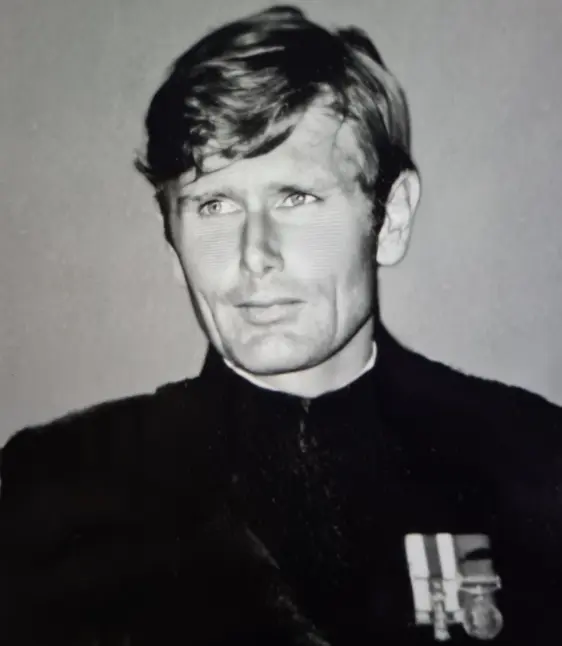
Sometimes a large regiment like ours fails to keep track of its officers when they leave the Service, transfer to Special Forces and, as in this case, join an allied army. No one could be less deserving of this reprehensible amnesia on our part than Robin Letts, who died in his adopted country, Australia, in September 2023. Very few officers of the Regiment in the post-war era have a comparable record of gallantry on active service as he.
Robin David Letts was born in 1940. He spent an idyllic childhood roaming the wilds of the Kenyan highlands on his family’s coffee plantation before moving to the coast near Mombasa and whiling away the hours spear fishing in the Indian Ocean. It is easy to see how this life of freedom, self-reliance and adventure shaped his character, especially in the early 1950s when the Mau Mau revolt was at its height. But like many colonial children the outside world called and he returned to England to complete his schooling at Wellington College before entering the Royal Miliary Academy Sandhurst in late 1958. While quiet and modest, his enthusiasm and determination were noted especially on the rugby field and in the boxing ring. Brian Smith, a Sandhurst classmate, recalls a boxing match where Robin stood his ground against a much more skilled opponent and was accordingly pounded unmercifully before rallying to win. He simply wore his opponent down with his immense endurance, ability to absorb punishment and never-say-die attitude.
Commissioned into the 1st Green Jackets (43rd and 52nd) in September 1960, Robin served in the Battalion in England. His soldierly talents seem to have been spotted early as he was among the small party selected for jungle warfare training in advance of the Battalion’s deployment to Malaya in 1960. He was the sort of subaltern for whom command of the Recce Platoon was a shoe-in.
Two memories of his short time in 1st Green Jackets surfaced recently: David Roberts recalls him winning the Battalion Cross-Country race and afterwards going to the medical centre with a sore ankle. It turned out that he had run the race with a broken bone in his foot. David remembers his grit and at the same time his charming company. Dick Muskett and other members of the Recce Pl under Robin remember him as an exceptional officer with the nickname “B’wana”. He was mentioned in despatches while serving in the Battalion in Borneo.
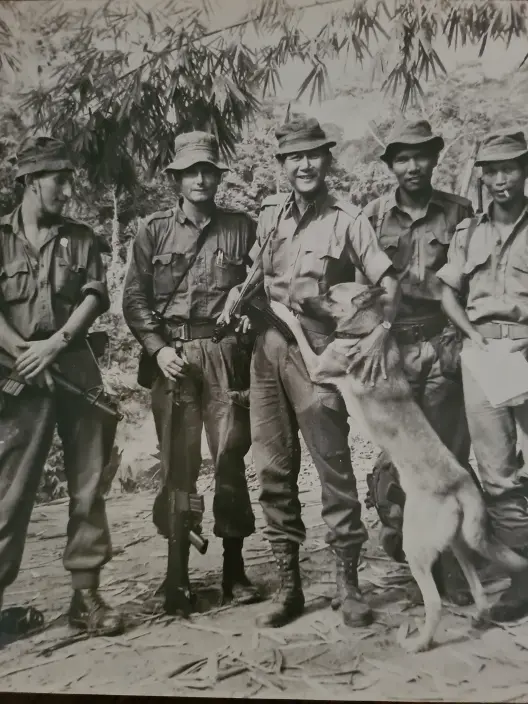
Lt Robin Letts (second from left) in Malaya about 1961
On the completion of his service in Malaya with 1st Green Jackets Robin successfully completed selection for 22 SAS and after initial specialist training returned to Borneo in 1965 where he served with D Squadron during Confrontation under the tutelage of Roger Woodiwiss and John Slim. He is especially remembered for his command of a very successful ambush in the Babang Baba area of Kalimantan in late April 1965. After completing two nursery patrols to gain an understanding of the operating environment he was given command of a four-man team consisting of himself, Corporal Taff Springles and Troopers Brown and Hogg. On their first patrol they were assigned the task, as part of the Claret series of operations, of determining the Indonesian positions 5km across the border on the Sentimo River. The going was extremely demanding as the area was a mixture of primary jungle and neck high swamp. After a gruelling seven-day struggle, they reached a 4m wide stream where they heard the rumble of motorboats in the distance. Robin then conducted a daylong close reconnaissance and determined that the Indonesians were using the stream as a throughfare. Accordingly, he requested permission to conduct an ambush. Next morning, the 10th day outside the wire, he placed the patrol on a loop in the stream hoping for permission to come through. The enemy were however on a different schedule and appeared in some force after two and a half hours. Without waiting for higher cover, Robin initiated the ambush and, after a brutal, intense and short close-quarter fight, destroyed four boats and but for one lucky escapee wiped out the entire enemy party. They then threw caution to the wind and conducted a rapid retreat to the border where after nearly a fortnight behind the lines they were winched to safety. Robin was awarded an MC for this action. His citation reads:
“Captain Letts then withdrew his patrol and brought them back to safety after a long exfiltration taking some three days, during which time he was shadowed by enemy patrols and was forced to take evasive action. The jungle through which the patrol had to move was thin in places, and the chances of discovery by enemy patrols were great.
In the above action Captain Letts displayed coolness and a disregard for his own safety worthy of the very highest praise. His actions and skill in withdrawing the patrol after their successful ambush through enemy country were of a very high order, and his determination in completing his mission was far beyond the call of duty. In this, and other patrols he has led of a similar nature, Captain Letts has at all times displayed qualities of professional skill and devotion to duty in the very highest tradition of the Service.”
Robin continued to serve on secondment to 22 SAS until late 1968. During this time, he served as a Patrol Commander during the Aden Emergency and became both an early advocate for Military Freefall parachute insertion techniques and a highly accomplished free-fall sport parachutist. In late 1968 he led the British Army Free-Fall Team on a tour of Australia. This experience prompted him to emigrate. He could not have known it then, but 1968 was the first year since 1945 that no British soldier had been killed on operations. Robin had little interest in peacetime soldiering. Desk work, he declared, held even less interest. So, with a letter of introduction from Arish Turle, a brother Greenjacket officer in Special Forces, Robin transferred to the Australian Army and became a member of the Australian SAS (SASR) in 1969. Though he did, eventually, command a desk, the transfer and emigration gave him, as it turned out, exactly what he wanted. Arish had also given Robin another letter of introduction, this one more personal than the other, by means of which Robin met his Anglo-Tasmanian wife, Rachel. They married in 1969.
Stationed initially in Perth, Western Australia, as the second-in-command of 2 SAS Squadron, he first deployed to Papua New Guinea as part of the squadron work up training prior to their 1971 ten-month operational tour of South Vietnam. While his time in Vietnam lacked the personal excitement of earlier deployments his experience and knowledge of the challenges of operating in small groups away from immediate support was invaluable. This was particularly evident in his wise and compassionate handling of a tragic blue on blue contact involving the death of 2Lt Brian Jones, a highly respected young officer.
Returning to Australia in October 1971, Robin served for a spell on the staff of the 1st Recruit Training Battalion in Wagga Wagga before being posted to Papua New Guinea initially as a Company Commander with the 1st Battalion of the Pacific Islands Regiment in Lae then as an instructor to the Royal Papuan New Guinea Constabulary in Port Moresby. Rachel tells of the Australian and PNG wives from the unit keeping up with the frequent deployments to remote jungle bases from Port Moresby by means of friendly “hi-jacks” of superannuated aircraft. It seems that adventurous resourcefulness and determination were things the couple shared in their 50 years together. Their two sons, Adrian and Domenic, were born during the ‘70s.
On return from Papua New Guinea in early 1975 Robin began a two-year posting as second-in-command of the 1st Battalion, Royal Australian Regiment in Townsville, Far North Queensland. His long battle to stay clear of staff work was wearing thin by the end of this period. The desk he eventually did command was in the Chief of the General Staff’s outer office in Army Headquarters, Canberra. A prime career post in anybody else’s book. While on staff he advocated for the development of a surveillance unit in Northern Australia using locally recruited indigenous soldiers. While he took no part in the further development of the concept it was expanded upon by Colonel Mike Jeffery (later Governor General of Australia - who had likewise served on attachment to D Squadron in Borneo and with the Pacific Islands Regiment in Papua New Guinea) and led to the establishment of the North-West Mobile Force (NORFORCE). Robin did well in this his first truly staff posting and as a result was promoted to Lt Colonel and appointed to command the Parachute Training School at RAAF Base Williamtown, New South Wales.
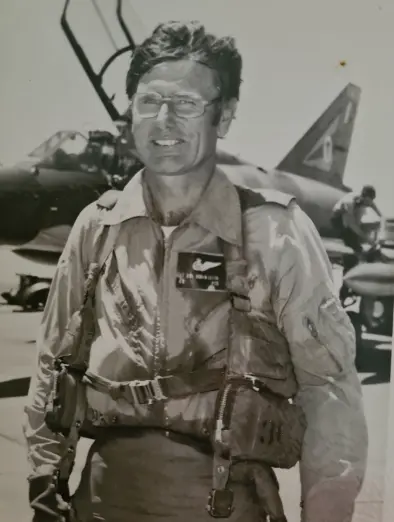
LTCOL Letts MC as CO PTS in 1980
Following his command appointment, he returned to Canberra and attended the Joint Services Command and Staff Course before commencing a long stint in Army Headquarters. He used his time wisely by both concentrating on family life and promoting the importance of initiative, determination, resourcefulness, integrity, courage and loyalty as key attributes in soldiering. He was the leading light for the Australian elements of Operation Raleigh, a five-year program involving multiple expeditions throughout Australia and surrounding seas, and the principal author of a study on the value of adventurous training in the development of junior combat leaders. This led to the establishment of the Army Adventurous Training Centre. Throughout this period Robin remained positive in the face of minor opposition and successfully navigated the inertia associated with bureaucratic indifference. As one of his brother officers noted: Robin was a “quiet achiever”. His modesty, charm, common sense and unshowy natural authority were hard to resist. For all these and for his distinguished service to the Australian Army, Robin was appointed a Member of the Order of Australia (AM) in 1988.
After his retirement from the Australian Army in early 1989, Robin set up and ran an outdoor experiential learning program for urban youth at risk. The program, on behalf of the Sydney City Mission, was very innovative and relied heavily on Robin’s calm demeanour and considerable experience. He demonstrated that it was possible to develop a sense of civic responsibility in disaffected urban youth by improving their self-confidence and self-worth through participation in adventurous activities in a wilderness setting.
Throughout his life Robin remained an enigma. Seemingly diffident and somewhat absent- minded, but very decisive when it mattered most. A great listener and good at getting people to talk about themselves but rarely revealing his own inner most thoughts. An avid sportsman - skier, climber, sports parachutist, rugby, bush polo cross, golf and tennis player – enthusiastic and determined but not exceptionally skilled, except on the long-distance running track; quiet and modest but with achievements beyond most; a renaissance man: inquiring, curious and interested in the world about him; a prolific reader and writer on a wide range of military subjects; a master of several languages including Swahili and Bahasa Indonesian, with schoolboy French and Italian and Pidgin English as asides; a lover of the bush and remote places but at home in the city; a charming host who never had a bad word to say about anyone. Above all, he was a terrific and loving husband, father and grandfather. But as Robin was wont to say, and many will attest, he was born a hundred years too late. In many ways he was a character straight out of a C.S. Forrester novel – a “Brown on Resolution”, a “Hornblower”. His constant companion was “Other Men’s Flowers” the great anthology of English poetry selected by Field Marshall Wavell.
Although his time in the Royal Green Jackets was brief and overshadowed by the high distinction earned elsewhere, his example as a fighting officer, as a “quiet achiever” and family man overstep any boundaries set by rank, cap-badge or nationality. Today’s members of the Regiment would do well to study his example. And for those who served with him, wherever it may have been, it is right to commemorate and mourn the passing of a very exceptional Rifleman.
By Tom Hamilton-Baillie in the UK and Rick Moor in Australia with input from family, friends and former comrades-in-arms.
References:
- SAS: The Jungle Frontier, Peter Dickens, London, 1983
- SAS: Phantoms of the Jungle – Ma Rung, David Horner Sydney, 1989
- Australian War Memorial video on operations in South Vietnam by Captain Robin Letts https://www.awm.gov.au/collection/F04920.
The address for messages of condolence is Rachel Letts at: [email protected]