
‘OLD SOLDIERS NEVER DIE….THEY JUST FADE AWAY’ CORPORAL JOHN BRUCE ARTHUR 2nd Ox & Bucks LI, 6th Airborne Division
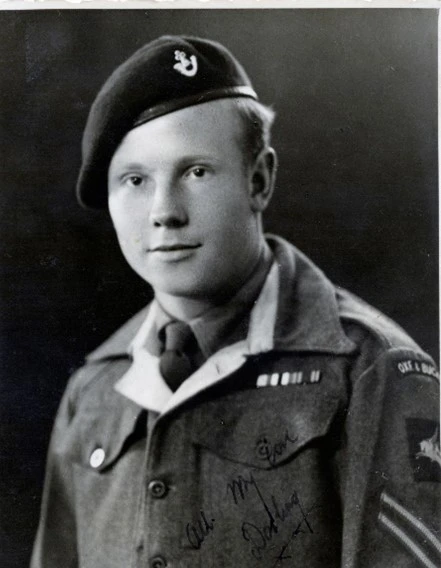

‘OLD SOLDIERS NEVER DIE….THEY JUST FADE AWAY’ CORPORAL JOHN BRUCE ARTHUR 2nd Ox & Bucks LI, 6th Airborne Division
Saturday 23 November 2024 saw the sad passing of Cpl John Bruce Arthur aged 101 years old. Cpl Arthur joined the Ox & Bucks at aged 18 in 1941 and served for 9 yrs.
From there Cpl Arthur went on to the young soldier’s battalion in Ballymena, Northern Ireland for training. In training he was a fast runner, he was fortunate to have a good Sgt who took him to one side and said “Look lad, when you start running, keep going, if you stop you’ll sink in the bog.” It took that one sentence for John to take on board and he became one of the fastest runners in the regiment.
While training there was a notice on the board for volunteers for the 2nd Ox & Bucks 6th Airborne Division and Cpl Arthur Volunteered. As he had 20/20 vision he was a candidate to become a machine gunner.
To begin their targets were pieces of corn/wheat and to start with they just missed everything until they were taught the rhythm which he still remembers to this day. Tap tap tap….and so on. They started off training with an Italian 20mm Hispano which was unstable, they went from that to the Bren Gun and then onto the Vickers.
After training this led to the D-Day Landings. Cpl Arthur was a Vickers machine gunner with his crew. He landed in a Horsa Glider at Ranville in the second wave, by which time the bridge had been taken by Major Howard’s team. The Horsa Glider was made of Bolser Wood, covered with resin and material. It was made never to fly again after landing. The pilots tried to land them in between two trees to take the wings off. They landed at 90mph after the Canadian Bomber Planes let them go. Landing on D-day he took part in the battle for bridges further down from Ranville.
He subsequently took part in various battles in France including Escourville, Herouvilette, Chateau St Come, and Breville. His job as a Machine gunner was to give ground cover to the foot soldiers.
It took some time before the hierarchy realised that the Germans were using Blenheim Lake at Woodstock like a compass to find their way to all the important industrial Cities. Once this was realised the lake was covered over so no reflections showed.
At Chateau St Come, after the Black Watch was all but decimated, they took the Chateau back which was hard fought ……senior officers he said found a whole pile of files and two big Ledgers at the bottom, the Germans had set fire to before leaving, however with these being on stone floors the Officers fortunately saved the ledgers and they were taken back to England until they were returned after the war. What was not realised until returned was that they contained all the stud lines for every horse the Chateau had produced.
Once the battles were under control they returned to Wing Barracks at Bulford. Training commenced for The Battle of the Bulge, also known as the Ardennes Counteroffensive, which took place from 16 December 1944 to 25 January 1945, and was the last major German offensive campaign on the Western Front during World War II.
Upon returning once again to Bulford for continuation training the next foray was for The Rhine Crossing. To achieve this, both divisions would be dropped near the village of Hamminkeln, and were tasked with a number of objectives: they were to seize the Diersfordter Wald, a forest that overlooked the Rhine, including a road linking several towns together; several bridges over a smaller waterway, the River Issel, were to be seized to facilitate the advance; and the village of Hamminkeln was to be captured. The Diersfordter Wald was chosen by Lieutenant-General Dempsey, the British Second Army commander, as the initial objective because its seizure would deny the Germans artillery positions from which they could disrupt Second Army's bridging operations. The regiment lost more than 50% of their Battalion before landing. Cpl Arthur’s regiment then marched 322 miles to Bad Kleinen where the division advanced north to near the Baltic Sea, reaching Wismar by the end of the war.
The Russians had come up from the opposite side to Cpl Arthur’s Regiment, and their job was to stop the Russians from proceeding and taking more ground. The Cossacks, on horseback, approached them and the MP’s had to stop them with back up by the regiment and shot a few 100 rounds over their heads.
Whilst there Cpl Arthur took part in the Guard of Honour receiving Marshall Konstantin Rokossovsky for the signing of the Treaty with Field Marshall Montgomery. Rokossovsky himself was quite informal with the British soldiers and spoke good English. John was included in the guard of honour and after was then invited to a meal with the Russians, they were served raw fish soaked in Vodka, washed down with bottles of Vodka!
In late 1945, 2nd Ox & Bucks, 6th Airborne Division deployed to Palestine to deal with the Stern Gangs, as the Jewish insurgency against British rule intensified. Its duties included enforcement of curfews and searches of cities, towns, and rural settlements for arms and guerrillas. In late 1947, as the British withdrawal from Palestine began, it was involved in the 1947-48 Civil War in Mandatory Palestine between the Jewish and Arab communities and engaged both Jewish and Arab forces. It was a fraught time and as soon as one communications line had been fixed, the men working with them from Palestine rigged up lines for them to be blown up.
Between October 1945 and April 1948, the division's losses to enemy action were 58 killed and 236 wounded. Another 99 soldiers died from causes other than enemy action. During searches of Jewish and Arab areas for arms, the division's soldiers had uncovered 99 mortars, 34 machine guns, 174 sub machine guns, 375 rifles, 391 pistols, 97 land mines, 2,582 hand grenades and 302,530 rounds of ammunition.
In 2017, Cpl Arthur, along with other Veterans was awarded the Legion d’Honneur Medal, France’s Highest honour at the National Arboretum by M. Mille for his part in D-Day and helping to Liberate France.
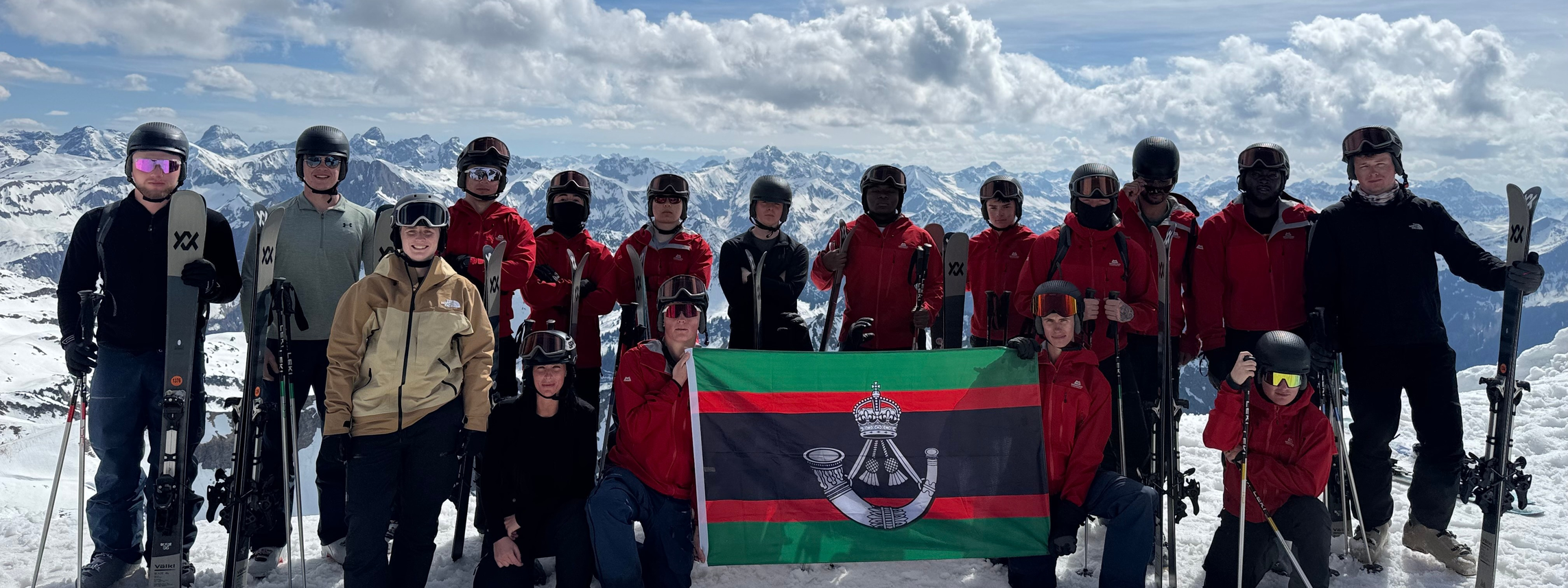
Cpl John Arthur was given a true Rifleman’s send off, supported and represented by Riflemen from 8 RIFLES, accompanied by RIFLES Buglers.