
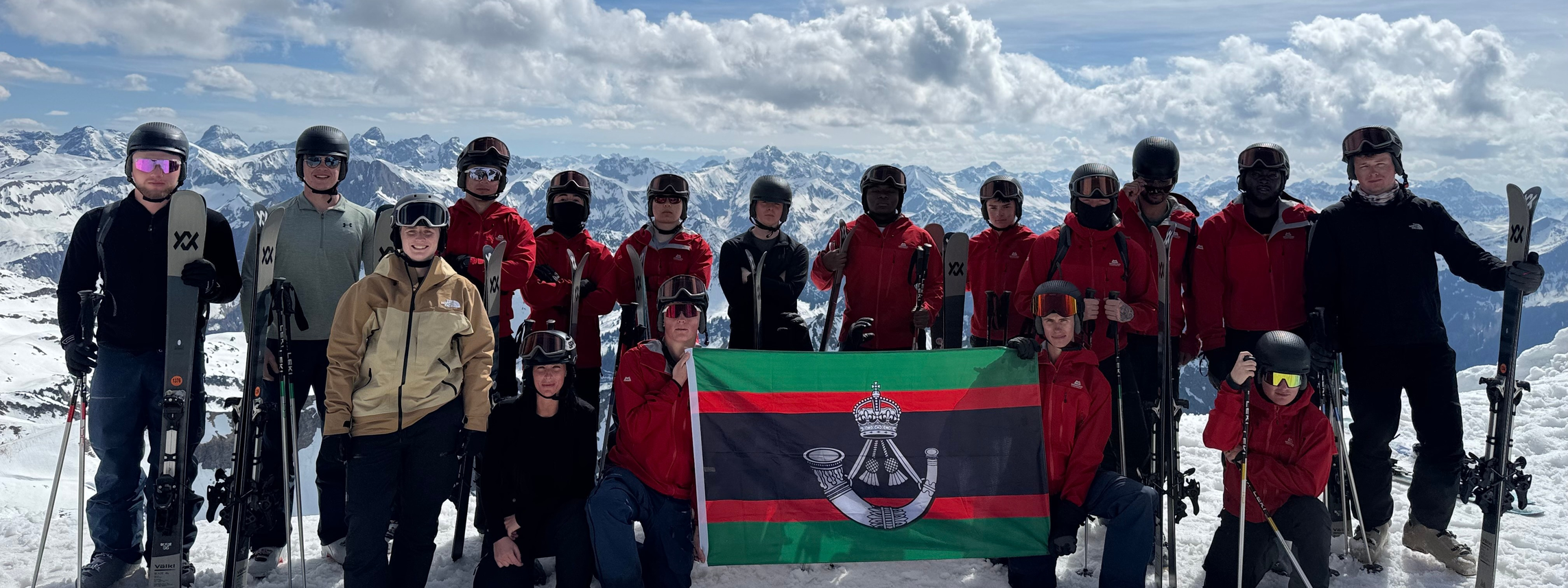
Happy Salamanca Day to us! This, The Rifles’ Regimental Day, was chosen because the majority of our Forming Regiments held the battle honour
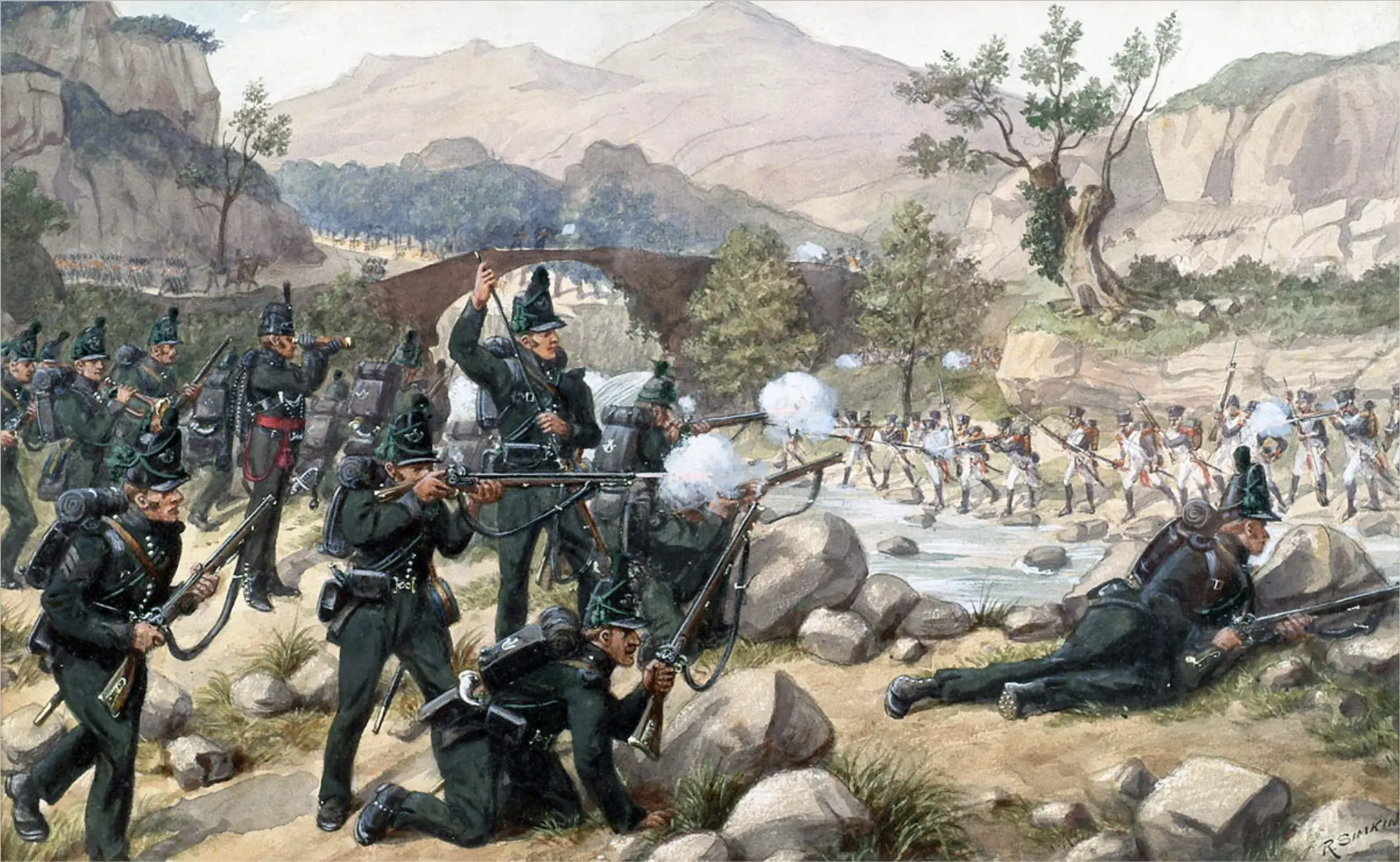
Happy Salamanca Day to us! This, The Rifles’ Regimental Day, was chosen because the majority of our Forming Regiments held the battle honour.
On this day in 1812, our Forming and Antecedent Regiments, which were part of the Army under the command of the Duke of Wellington, helped to deliver a decisive blow to the French Army in the Spanish Peninsula. The battle near the town of Salamanca was one of the decisive engagements of the brutal, protracted conflict which was the Peninsular War, and which eventually drove Napoleon’s Armies from the Iberian Peninsula.
Wellington’s Army, composed of British, Portuguese and Spanish troops, had been conducting a manoeuvre war through central Spain. After several days of both armies trying to out-manoeuvre each other, on the morning of 22nd July, close to the rough terrain around Los Arapiles, just south of Salamaca, Wellington saw that the French army, commanded by General Marmont, had over-extended its left flank. Observing from a high point on the ground, Wellington is said to have exclaimed: “By God, that will do!” and immediately ordered an attack into the exposed French flank.
His army was screened by skirmishers from the 60th (King’s Royal Rifle Corps) and 95th Rifles (Rifle Brigade) and the 68th Regiment (Durham Light Infantry), particularly around the wooded areas of Los Arapiles. Wearing green tunics and armed with the Baker Rifle, they operated in small teams and loose formation, using cover and mobility to outmanoeuvre their enemy.
The British infantry divisions and cavalry then smashed the French and forced the withdrawal of the survivors. The 6th Division, with Hulse’s brigade, led by the 1st Battalion of the 11th Regiment (later The Devonshire Regiment), and the 1st Battalion of the 61st Regiment (later The Gloucestershire Regiment) attacked and drove off the French rearguard. Hulse pressed home his attack determinedly, despite appalling losses in his two lead battalions, and thereby completed the defeat of Marmont’s army.
By the end Allies had sustained approximately 5,000 casualties. Acknowledging their losses, Wellington is supposed to have coined the nickname ‘The Bloody Eleventh’. for the 11th of Foot. The French, however, had lost some 14,000 men killed wounded or captured.
Salamanca was a major strategic defeat for the French, forcing them to retreat from Madrid, and so marking the beginning of the end of French domination of the Peninsula. Wellington was later made Field Marshal and granted his Dukedom in recognition of his outstanding generalship.
Together, the light infantry units formed the backbone of the famed Light Division, which became renowned throughout the Peninsula War for its agility, professionalism and independent spirit. At Salamanca, they embodied the values that The Rifles maintain to this day: “Swift and Bold”.