
Obituary of Captain Anthony Husher
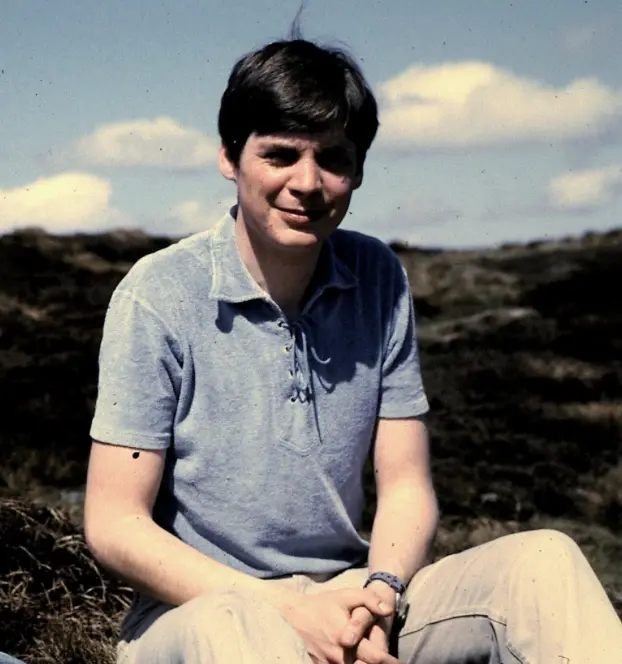
Anthony (Tony) Husher, known to some as “Hush Pups”, who served as a junior officer on a short service commission in 2 RGJ in the 70s, has died in Nanyuki, Kenya, aged 76. His was a life lived sometimes in the fast lane and sometimes on the hard shoulder. Towards the end he relied on support from among his friends, former brother officers and colleagues from the Regiment and other military organisations.
Tony was born a Canadian. His father, an officer in the Royal Canadian Navy, spent some years stationed in England, where Anthony attended Redrice School and Mons OCS. He joined B Coy 2 RGJ in Munster in 1970 as a Platoon Commander, and by 1971 he was serving in Ballykelly under Edward Jones who may have been the first to imbue the tall, willowy young officer with the values of boldness and quick thinking as well as care for his Riflemen; attributes that served him well in later life.
His baptism of fire, or, at least, of the rocks and other things thrown by rioters in the Creggan during internment, took him temporarily out-of-action with cuts and bruises. He spoke, in later life, of at least four occasions that he had been though close shaves in gun-battles, though most were not under British Command. Following his time as a platoon commander in Northern Ireland he had a safer, though for him particularly, a duller tour with the Infantry Junior Leaders Battalion before returning to 2 RGJ. He held several different appointments in the Battalion, Recce Platoon commander and 2ic of A Company in two separate Northern Ireland tours. He also had a short spell at the Rifle Depot. For an officer commissioned from Mons OCS it was a long period, with much operational experience.
Tony left the Battalion and the Army in 1978, to take up a commission in Rhodesia during the later years of UDI. He commanded a company in The Rhodesian African Rifles (RAR)taking part in extensive operations in the ultimately futile defence of the Smith regime.
As a Major in the Rhodesian/Zimbabwean Army (picture credit RAR Association)
After the Lancaster House Agreement in December 1979, Tony, by then a seasoned veteranof the bush war, was a major commanding a motorised infantry combat team, which was deployed by the Zimbabwean government in February 1981 as part of the force drawn from the former Rhodesian African Rifles to put down a mutiny of Zimbabwean troops at Entumbane on the outskirts of Bulawayo. For his part in this operation Tony was decorated with the Bronze Cross of Zimbabwe by Robert Mugabe. For more detail on the battle and Tony’s part in it see https://en.wikipedia.org/wiki/1981_Entumbane_uprising#Aftermath. Tony left the Zimbabwean army shortly thereafter.
For a while, as did many of his former African comrades, he earned a precarious living in the employment of various security firms and Private Military Companies (PMCs). He was under contract with the Sri Lankan ministry of defence, leading a team that provided training in various aspects of security during that country’s struggle with the Tamil Tigers. In 1990, heand John Titley (formerly of the Gurkhas and 2RGJ) were two of the three founding directors of Gurkha Security Guards, whose first contract was in Mozambique guarding some of Lonrho’s extensive plantations against guerillas, who “clashed with Tony’s Gurkhas once and never came back for more”. More work followed and took him to various theatres of operations, for security, mine-clearance and training contracts, including Sierra Leone and the Kirkuk region of Iraq. Of his time in Iraq, he told the story of leading his troops through minefields on two occasions. He also told of one incident when he and a few others disrupted a well-sited and mine-protected ambush position on a US supply route. The action earned him the personal thanks of the US Army commander.
Tony stepped down from board of GSG in 1995, and shortly thereafter he was involved in setting up the Canadian mine-clearance charity, CAMEO, for whom he worked in various theatres, scoping out and negotiating mine-clearance contracts, branching out occasionally into clean water programs. From 2006 his health began to fail and he settled in Kenya.
Tony’s soldiering career in its many guises certainly made him no stranger to the perils, thrills and strain of such a life. Though occasionally the rewards had been considerable they didn’t stretch to sustaining a prolonged life as an invalid. He often remarked on the irony that in all the danger zones across the world that he had operated in, he was never seriously injured by hostile action; it was series of minor strokes that effectively immobilised him and, in the end, cancer claimed him. It was the kindness of friends that helped him find some comfort in Kenya as his health deteriorated. A man less well liked and admired would have found it difficult. He had, and retained, a boyish charm, which those who served with him will remember with affection and feel a pang at the loss of a brave and adventurous brotherofficer.
Tony is survived by a daughter, Georgina and his former partner Leslie. He is also survived by his three surviving sisters. The mainstay of his support latterly was the kindness of Colonel (Retd) Rob Andrew, late KOSB. Colonel Rob may appreciate any reminisces from readers of this. The e-mail address is: [email protected]
TRH-B
With help from John Pentreath and Toby Heppel