
Colonel Nicholas (Nick) Mangnall OBE late RGJ Obituary
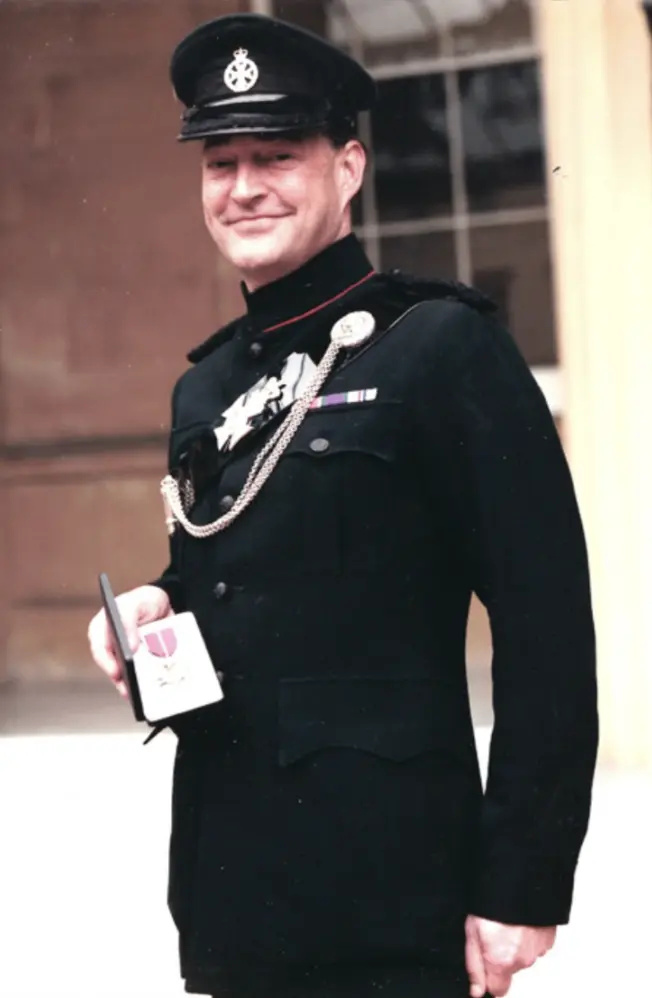
Nick Mangnall, who has died aged 75 in Tetbury, was at the core of this brotherhood of officers, despite his young age and having been commissioned from Mons Officer Cadet School at 19 just a year or two before. Those men knew how to enjoy themselves and each other’s company off duty and, when on duty, took their responsibilities very seriously,leading their riflemen with dash, apparent effortlessness and thorough professionalism. But for Nick, like all his generation in the Regiment, it was Northern Ireland that dominated his years as a soldier.
Mike Robertson, Nick’s CO in 2 RGJ said of him:
He was an excellent ops officer … 24/7 was spot on the ball, quick reacting but cool and an astute judge of people and situations. The bonus was his wit and enjoyment of his job and life in general.
Although he never lost the ability to charm and share a joke, it is not unfair to say that operations in the Province, on the staff and in the field, made the serious and professional side of his character the dominant one.
Although he undertook several Operation Banner tours in 2 RGJ and, later, with 1 RGJ, Nick’s Northern Ireland credentials first received wider recognition in the two years he served as SO2 G2 South in Headquarters 39 Infantry Brigade in 1986 and 1987. Though he was no stranger to the staff, having been (then) Lt Gen Sir Roly Gibbs’ ADC in 1971-72, and withtwo tours in the HQ’s of 4th Armoured Division and 11th Armoured Brigade in Germanybehind him, it was as an officer on the intelligence staff in Belfast that he excelled. It was two years of relentlessly hard and detailed work, and for his exemplary service he was awardedan MBE having gained a very deserved reputation among the regiments serving in the Brigade at the time and, in particular, with the Royal Ulster Constabulary.
There were interludes in operational service. Nick was a popular and effective adjutant of the 4th Battalion in Davies St from 1976 to 1978 and returned to that Battalion as Training Major and Second-in-Command for a little over a year in 1988. During the second tour in Davies St, he and Neil Johnson, the Commanding Officer, acquired the horse furniture for rifle regiment field officers and rode mounted on borrowed “chargers” at the head of a guard of honour in green uniforms in that year’s Lord Mayor’s parade in the City. It was probably the last occasion that RGJ officers needed to wear spurs in their boots.
For all the “laughey-jokey” moments, as he would have called them, Nick was an officer devoted to his profession. His adaptability and resourcefulness were recognised by Peter Treneer-Michell, then commanding 2 RGJ in Tidworth, when, from a talented list of officers in the Battalion, Nick was selected to join Colonel Peter’s small team forming part of the Commonwealth Monitoring Force in Rhodesia in late 1979. The experience, hair-raising at times, set him up for one of his later appointments as Director of Studies at the Southern Africa Staff College based in Harare. Members of the Monitoring Force had been awarded a medal by the newly formed state of Zimbabwe that celebrated its independence. This was in addition to the British campaign medal for the operation and, under the Ministry of Defence’s rules, was not permitted to be worn by serving British officers. Nick overlooked the rules and gained much kudos when his Zimbabwean colleagues saw the “freedom fighter’s” colours on his well-beribboned chest.
In September 1989 Nick was appointed Commanding Officer of 8th Battalion, The Ulster Defence Regiment in Dungannon. Given his extensive experience in the Province, it was not a surprise when the announcement was made. However, after the passage of years readers may not recall the special nature of that type of command. It was full-on operational service all the time. It required exceptional commanding officers who could lead such a diverse and often sceptical rank and file, many with years of service in the counties of Northern Ireland, and earn their respect. When Nick assumed command, the UDR had undergone many changes and reorganisations and needed a steady hand on the tiller. Relations with the regular chain-of-command, the RUC and the agencies could be difficult, and Regular battalions serving alongside UDR battalions were not always enthusiastic about placing their companies under command of the UDR. However, Nick negotiated these challenges with through professionalism, skill and, above all, good leadership. The award of OBE at the end of his more than 2-year tour with 8 UDR was thoroughly deserved. He particularly enjoyed a period of his command tour when five fellow Green Jackets were serving in command appointments in the Province. Mike Smith MC with 4 UDR, James Jackson in 1/9 UDR, at the same time as all three regular Battalions under the command of Carron Snagge, Nick Cottam and Jamie Balfour were serving on operational tours.
Nick’s last operational tour was for six months in mid 1994 to Bosnia on the staff as chief of operations to General Sir Michael Rose. The work was as tense as any he had done previously. Nick’s commitment, good humour, his tireless work ethic and ability to rise above political, operational and public relations set-backs were tested to the fullest extent and never found wanting, as a highly appreciative letter, now in the possession of the family, amply testifies.
His final tours in the Army were spent in Greenwich as a member of the Directing Staff at the Royal Navy’s Staff College, then as Director of Studies at the Zimbabwe Army Staff College whilst on Loan Service in Harare, and finally in Warminster as Deputy Chief of Staff at the Headquarters Director of Infantry. He retired in 2004.
Nick had married Carola Sayers at the beginning of the 80s. They made a glamorous couple and had three sons, Thomas, Timothy and Anthony. Latterly they lived in Oaksey, a picture-perfect village on the Wiltshire – Gloucestershire border. The marriage was dissolved in 2001. Afterwards, Nick continued to live in Oaksey, immersing himself in village life as a church warden, chairman of the PCC, chairman of the Playing Fields Trust and in local fundraising. He was a proud and loving father and grandfather to his three boys and their families. He died of cancer after a long illness.
He will be fondly remembered as a fine Rifleman and brilliant companion by all those who were lucky enough to have served with him.
TRH-B
HRCW
Letters of condolence may be sent to:
Thomas Mangnall
Brookhouse Farm,
Yarpole
Herefordshire
HR6 0BB
Funeral Details
All Saints Church, Oaksey, 11.30am on Friday 8th August